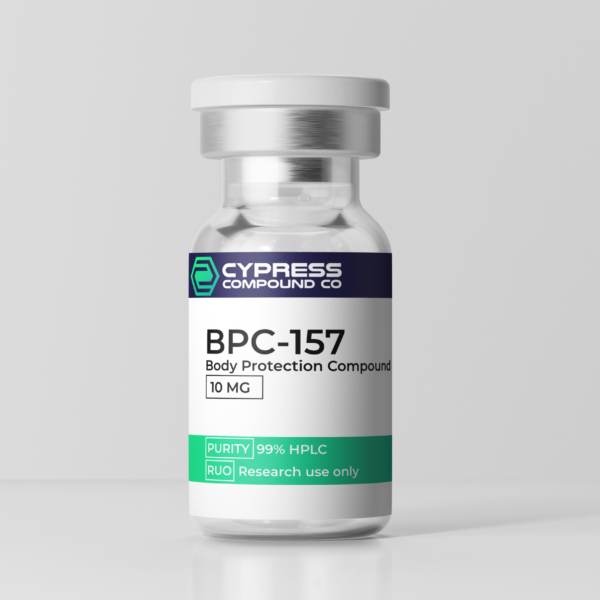
BPC-157 10mg
$90.00BPC-157 is a research peptide consisting of a 15-amino-acid sequence (Gly-Glu-Pro-Pro-Pro-Gly-Lys-Pro-Ala-Asp-Asp-Ala-Gly-Leu-Val), derived as a fragment of a naturally occurring body protection compound found in gastric juice. It is studied for its influence on angiogenic and cytoprotective signaling pathways.
Preclinical investigations suggest that BPC-157 modulates nitric oxide signaling, growth factor expression, and extracellular matrix remodeling. These properties make it a useful research model for examining molecular repair mechanisms and regenerative processes under controlled stress conditions.
For research use only. Not intended for human or animal use.
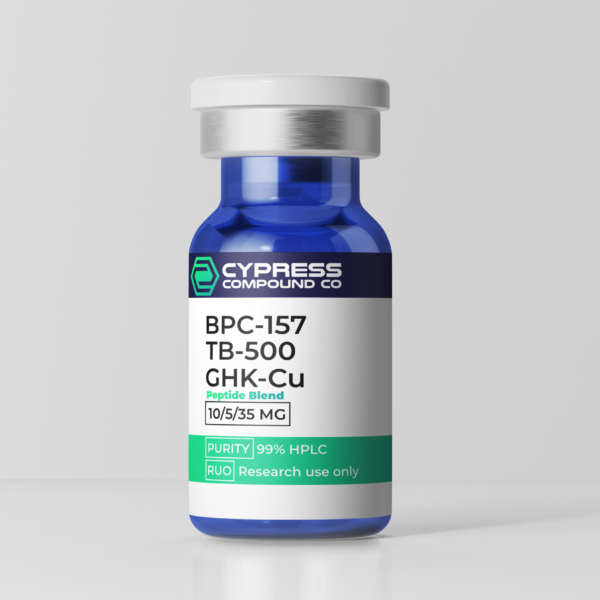
BPC-157, TB-500, GHK-Cu – Glow Blend (50mg x 10)
$2,032.00GHK-Cu is a research peptide consisting of the tripeptide sequence Gly-His-Lys complexed with copper(II) ions, forming a biologically active peptide–metal complex. It is studied for its role in extracellular matrix regulation, cellular signaling, and copper-dependent biochemical pathways.
Preclinical investigations suggest that GHK-Cu influences collagen synthesis, gene expression, and antioxidant enzyme activity through copper-mediated redox mechanisms. As a research compound, it is commonly used to explore peptide-driven tissue remodeling, metalloprotein regulation, and mechanisms relevant to regenerative biochemistry.
For research use only. Not intended for human or animal use.
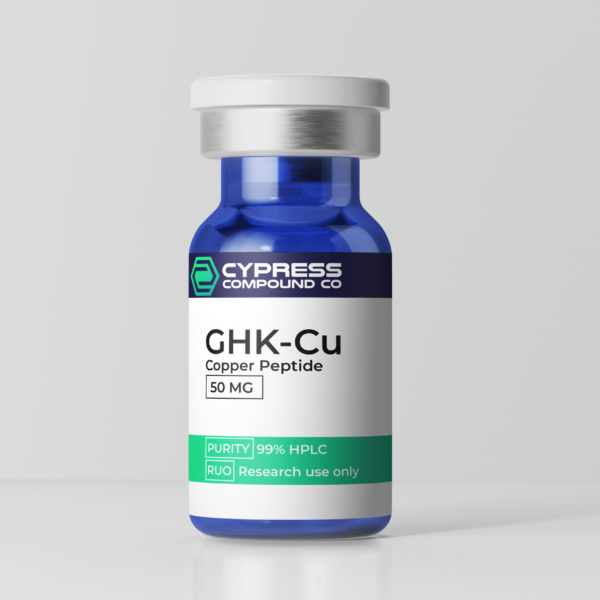
BPC-157, TB-500, GHK-Cu – Glow Blend(50mg x 10)
$510.00GHK-Cu is a research peptide consisting of the tripeptide sequence Gly-His-Lys complexed with copper(II) ions, forming a biologically active peptide–metal complex. It is studied for its role in extracellular matrix regulation, cellular signaling, and copper-dependent biochemical pathways.
Preclinical investigations suggest that GHK-Cu influences collagen synthesis, gene expression, and antioxidant enzyme activity through copper-mediated redox mechanisms. As a research compound, it is commonly used to explore peptide-driven tissue remodeling, metalloprotein regulation, and mechanisms relevant to regenerative biochemistry.
For research use only. Not intended for human or animal use.
BPC-157, TB-500, GHK-Cu 50mg – Glow Blend
$145.00GHK-Cu is a research peptide consisting of the tripeptide sequence Gly-His-Lys complexed with copper(II) ions, forming a biologically active peptide–metal complex. It is studied for its role in extracellular matrix regulation, cellular signaling, and copper-dependent biochemical pathways.
Preclinical investigations suggest that GHK-Cu influences collagen synthesis, gene expression, and antioxidant enzyme activity through copper-mediated redox mechanisms. As a research compound, it is commonly used to explore peptide-driven tissue remodeling, metalloprotein regulation, and mechanisms relevant to regenerative biochemistry.
For research use only. Not intended for human or animal use.
GHK-Cu Copper Peptide (50mg x 10)
$510.00GHK-Cu is a research peptide consisting of the tripeptide sequence Gly-His-Lys complexed with copper(II) ions, forming a biologically active peptide–metal complex. It is studied for its role in extracellular matrix regulation, cellular signaling, and copper-dependent biochemical pathways.
Preclinical investigations suggest that GHK-Cu influences collagen synthesis, gene expression, and antioxidant enzyme activity through copper-mediated redox mechanisms. As a research compound, it is commonly used to explore peptide-driven tissue remodeling, metalloprotein regulation, and mechanisms relevant to regenerative biochemistry.
For research use only. Not intended for human or animal use.
GHK-Cu Copper Peptide 50mg
$60.00GHK-Cu is a research peptide consisting of the tripeptide sequence Gly-His-Lys complexed with copper(II) ions, forming a biologically active peptide–metal complex. It is studied for its role in extracellular matrix regulation, cellular signaling, and copper-dependent biochemical pathways.
Preclinical investigations suggest that GHK-Cu influences collagen synthesis, gene expression, and antioxidant enzyme activity through copper-mediated redox mechanisms. As a research compound, it is commonly used to explore peptide-driven tissue remodeling, metalloprotein regulation, and mechanisms relevant to regenerative biochemistry.
For research use only. Not intended for human or animal use.
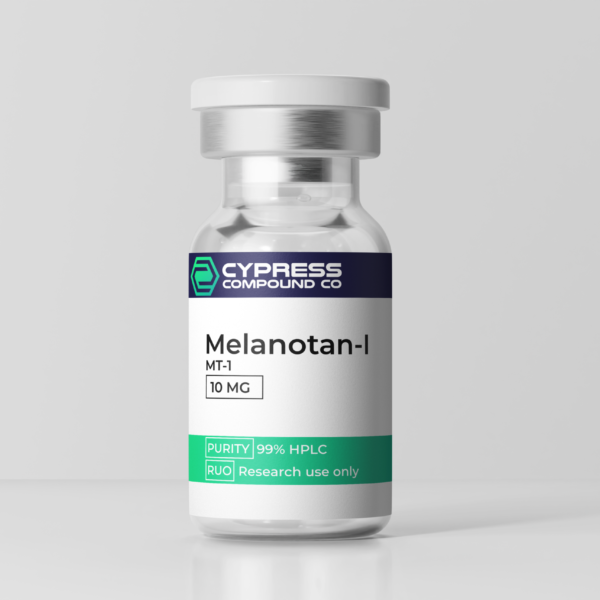
Melanotan 1 MT1 10mg
$55.00Melanotan I is a synthetic, linear α-melanocyte-stimulating hormone (α-MSH) analog with the sequence Ac-Ser-Tyr-Ser-Met-Glu-His-Phe-Arg-Trp-Gly-Lys-Pro-Val-NH₂. It is primarily studied for its activity at melanocortin receptor 1 (MC1R) and its role in melanocortin receptor activation.
In vitro studies indicate that Melanotan I activates cAMP-dependent signaling pathways associated with pigmentation regulation and photoprotective responses. As a research compound, it is commonly used in receptor pharmacology and cell-signaling investigations examining peptide–GPCR interactions and downstream transcriptional regulation under controlled laboratory conditions.
For research use only. Not intended for human or animal use.
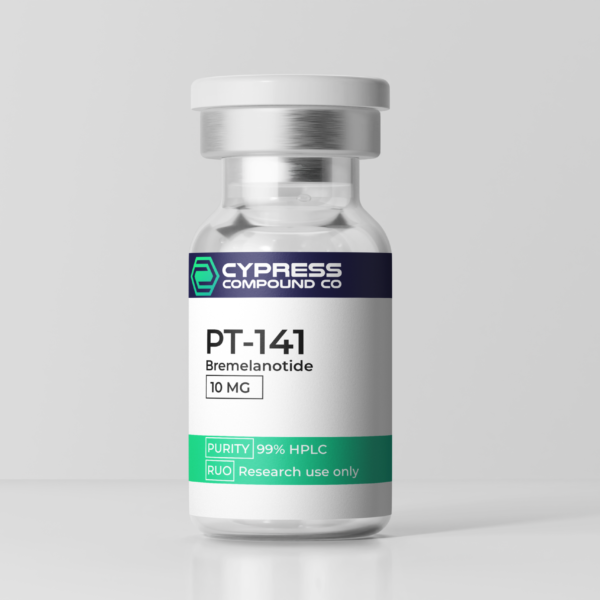
PT-141 (10mg x 10)
$425.00PT-141 is a synthetic research peptide structurally derived from the melanocortin analog Melanotan II. It is studied for its selective binding activity at melanocortin receptors MC3R and MC4R and its role in modulating neuropeptide-mediated signaling pathways.
In experimental systems, PT-141 is commonly used to investigate G protein–coupled receptor (GPCR) activation, neuronal signaling dynamics, and mechanisms related to neuroendocrine regulation under controlled laboratory conditions.
For research use only. Not intended for human or animal use.
PT-141 10mg
$50.00PT-141 is a synthetic research peptide structurally derived from the melanocortin analog Melanotan II. It is studied for its selective binding activity at melanocortin receptors MC3R and MC4R and its role in modulating neuropeptide-mediated signaling pathways.
In experimental systems, PT-141 is commonly used to investigate G protein–coupled receptor (GPCR) activation, neuronal signaling dynamics, and mechanisms related to neuroendocrine regulation under controlled laboratory conditions.
For research use only. Not intended for human or animal use.
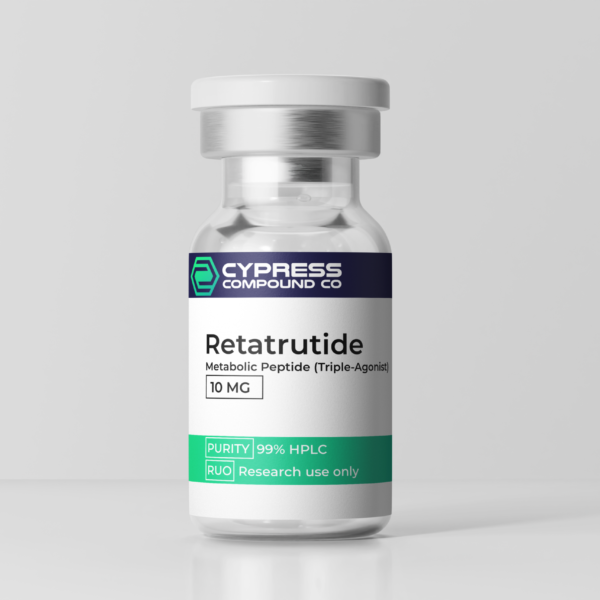
Retatrutide
Price range: $225.00 through $375.00Melanotan I is a synthetic, linear α-melanocyte-stimulating hormone (α-MSH) analog with the sequence Ac-Ser-Tyr-Ser-Met-Glu-His-Phe-Arg-Trp-Gly-Lys-Pro-Val-NH₂. It is primarily studied for its activity at melanocortin receptor 1 (MC1R) and its role in melanocortin receptor activation.
In vitro studies indicate that Melanotan I activates cAMP-dependent signaling pathways associated with pigmentation regulation and photoprotective responses. As a research compound, it is commonly used in receptor pharmacology and cell-signaling investigations examining peptide–GPCR interactions and downstream transcriptional regulation under controlled laboratory conditions.
For research use only. Not intended for human or animal use.
TB-500 (10mg x 10)
$1,318.00BPC-157 is a research peptide consisting of a 15-amino-acid sequence (Gly-Glu-Pro-Pro-Pro-Gly-Lys-Pro-Ala-Asp-Asp-Ala-Gly-Leu-Val), derived as a fragment of a naturally occurring body protection compound found in gastric juice. It is studied for its influence on angiogenic and cytoprotective signaling pathways.
Preclinical investigations suggest that BPC-157 modulates nitric oxide signaling, growth factor expression, and extracellular matrix remodeling. These properties make it a useful research model for examining molecular repair mechanisms and regenerative processes under controlled stress conditions.
For research use only. Not intended for human or animal use.
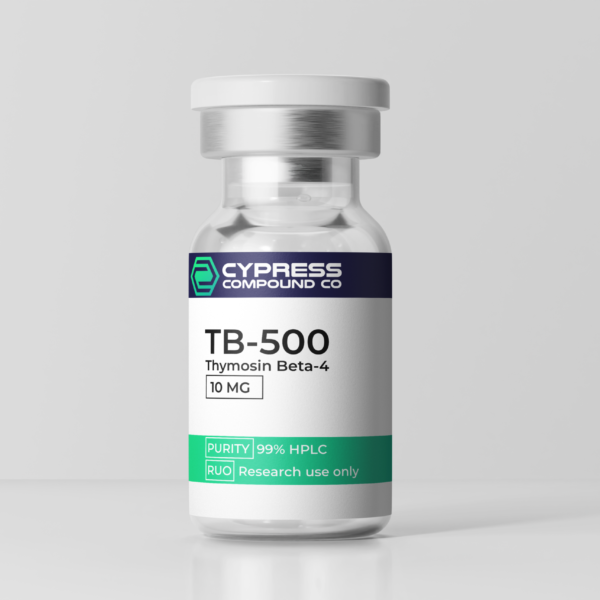
TB-500 10mg
$155.00TB-500 is a research peptide corresponding to a 43-amino-acid sequence derived from Thymosin Beta-4, an actin-binding protein involved in cytoskeletal organization and cellular regeneration. It is studied for its role in regulating actin dynamics and cell motility.
Preclinical studies indicate that TB-500 influences cell migration, angiogenic signaling, and actin polymerization through modulation of the β-actin/G-actin cycle and associated growth-factor pathways. As a research compound, it is commonly used to investigate wound repair mechanisms, cellular movement, and peptide-mediated regenerative processes under controlled experimental conditions.
For research use only. Not intended for human or animal use.